
The UNI expansion tank and the FERRO safety group—reliable protection for central heating and hot water systems
To ensure the safety of the heating and domestic hot water systems, it is essential to have proper protection against excessive pressure buildup. A solution that combines effectiveness, versatility, and ease of installation is the UNI diaphragm vessels with a safety group. These are proven components designed to work together, providing peace of mind and a sense of security for both installers and users.
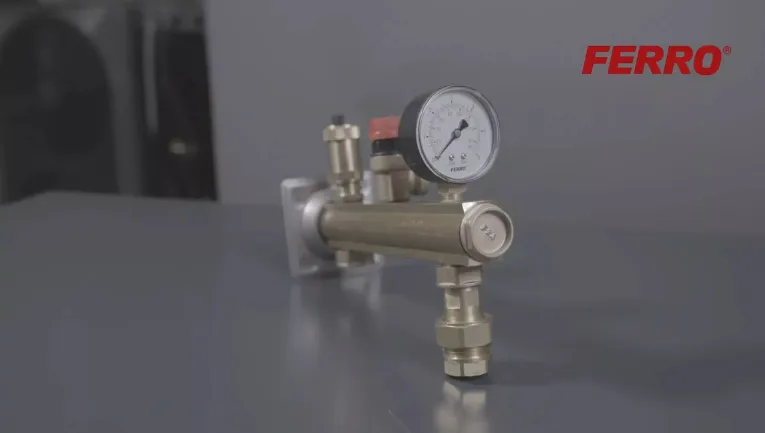
Thermal expansion occurs in every central heating (CH) and domestic hot water (DHW) system. When the medium—usually water—is heated, its volume increases, leading to a rise in system pressure. In a closed system, if this pressure is not properly balanced, it can cause damage to system components such as pipes, valves, or heat exchangers. This is where the FERRO kit comes into play: the UNI diaphragm vessel and the safety group.
How does the UNI diaphragm vessel work, and what is the safety group used for?
The diaphragm vessel absorbs excess liquid volume, stabilizing the pressure in the system, while the safety group monitors the pressure level and protects the entire system against uncontrolled pressure buildup.
Design and Operation of the FERRO Safety Group
The FERRO safety group is a complete module that is installed as close as possible to the heat source—such as a gas boiler or heat pump—and protects the system in accordance with applicable technical standards. It consists of:
- a diaphragm safety valve that automatically opens when the pressure exceeds the permissible value.
- a pressure gauge that displays the current pressure level in the system.
- an automatic air vent (for central heating versions), which removes air from the system and prevents air from entering it.
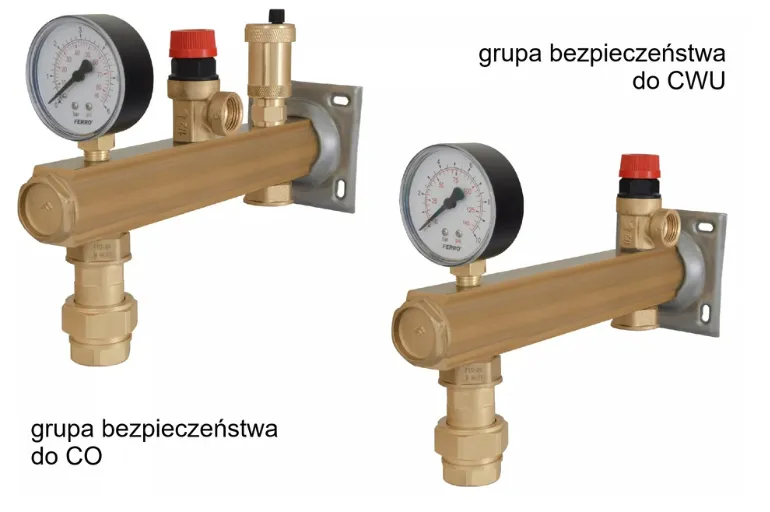
The entire unit is made of durable materials: a CW617N brass beam and a stainless steel mounting plate, ensuring longevity.
UNI Vessel – Universal, i.e., for Central Heating and Domestic Hot Water
The UNI diaphragm vessel is a component designed to operate in both central heating and domestic hot water systems. So there’s no need to choose—the same vessel can be used in either a heating system or a domestic hot water system.
Key features of the UNI vessel:
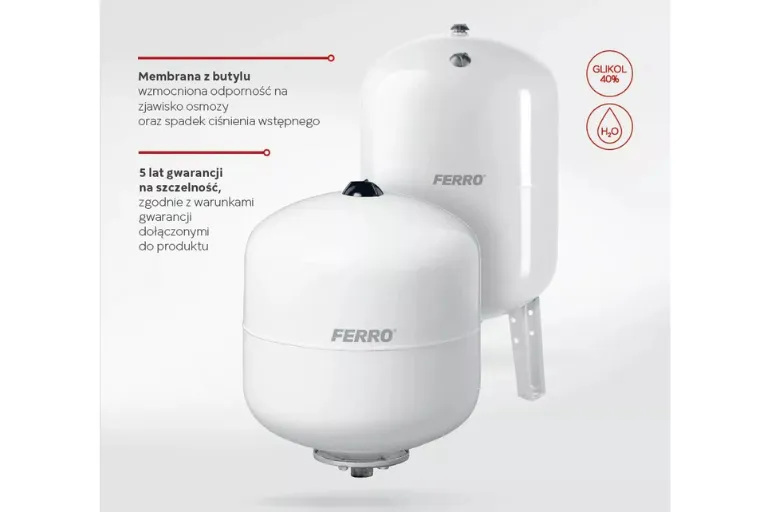
- Replaceable butyl diaphragm —several times more resistant to osmosis than traditional EPDM.
- AISI 304 stainless steel flange —guarantees a leak-tight and durable connection even under extreme operating conditions.
- 5-year warranty —a testament to the quality and longevity of the design.
- PZH certification – approved for contact with drinking water.
- Capacity range: 5 to 300 liters – easily adaptable to any project.
- Pre-charge pressure: 3.5 bar, maximum operating pressure: 10 bar, operating temperature: from -10°C to +100°C.
Importantly, the UNI tank is available in two versions—wall-mounted and floor-standing—so you can choose the option that best suits the installation location and the installer’s preferences.
Installation Instructions – Key Guidelines
Proper installation is essential for safe and trouble-free operation. FERRO recommends that installation be performed by a professional, in accordance with the following guidelines:
- System Preparation – Flush the system and remove any solid contaminants.
- Installing the safety assembly – screw it to the wall as close as possible to the heat source, with the pressure gauge facing upward. There must be no valves between the heat source and the safety assembly.
- Connection to the heat source – seal the connection to the medium supply pipe using Teflon tape or packing, and tighten it with two wrenches to avoid damaging the fitting.
- Installation of the UNI vessel – this can be done directly or via the SN01 quick-connect fitting. The latter solution allows for easy removal of the vessel without having to drain water from the system.
- Setting the pre-pressure – adjust it according to the design (e.g., for central heating, typically 1–1.5 bar). Any changes must be permanently marked on the nameplate.
- Drainage from the safety valve – the discharge pipe must be routed to the sewer system, ensuring an adequate slope. The pipe may be up to 2 m long and have no more than two bends. It is not permitted to install valves or components that restrict flow on this pipe.
- Leak test of connections – Before the pressure test, disconnect the expansion tank to prevent damage.
Why Choose FERRO?
The FERRO kit with the UNI expansion tank and safety group is a solution that works well in any system. Here are the main advantages of this kit:
- Versatility – the same vessel for both DHW and central heating.
- High-quality components —corrosion-resistant stainless steel, durable butyl membrane, and a robust brass construction.
- Ease of installation —quick-connect fitting, simple installation procedure, compatibility with many systems.
- Safety and reliability – overpressure protection, quick venting capability, precise pressure reading.
- Warranty – 5 years on vessel leak-tightness. FERRO is confident in the high quality of its products.
The UNI diaphragm vessel and FERRO safety group are the ideal choice for contractors and installers seeking simple, reliable, and versatile solutions. High-quality construction, compliance with standards, ease of use, and suitability for both heating and water systems—the UNI expansion tank with the FERRO safety group offers all of this.
Find more expert advice on the FERRO PRO YouTube channel.