
Initial Adjustment – The Key to Hydraulic Balance in Heating Systems
FERRO decorative thermostatic valves for radiators feature a preset function. Read on to learn what a preset is, what it’s used for, and how it affects thermal comfort in rooms.
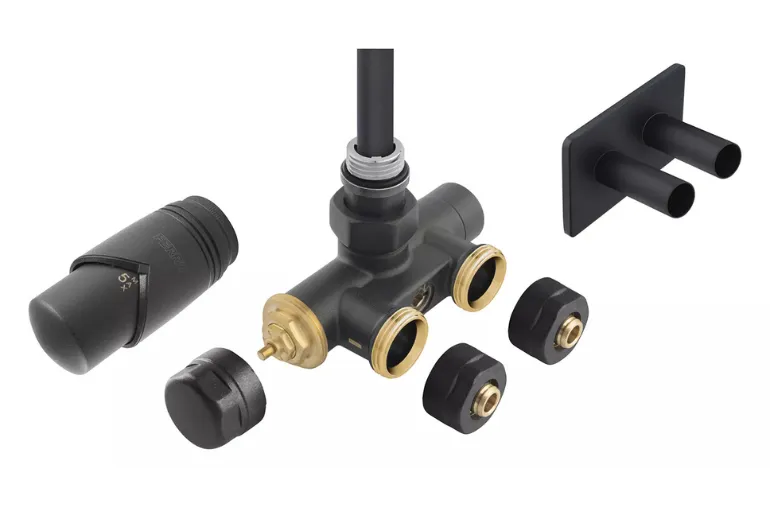
Sometimes, within the same heating system, some radiators are scalding hot, while others are barely warm. This is the result of a hydraulic imbalance in the heating system. This problem can be quickly and effectively solved by installing thermostatic valves with a preset function . Once properly adjusted, each room will receive exactly the amount of heat it needs.
Preset—what is it?
It is a factory-set feature of the valve that, regardless of the thermostat knob (thermostatic head), allows the water flow through the radiator to be limited according to the heat demand of a given room. This prevents a situation where the radiators closest to the heat source are overheated, while those furthest away remain cold—a problem that cannot always be corrected with a thermostat.
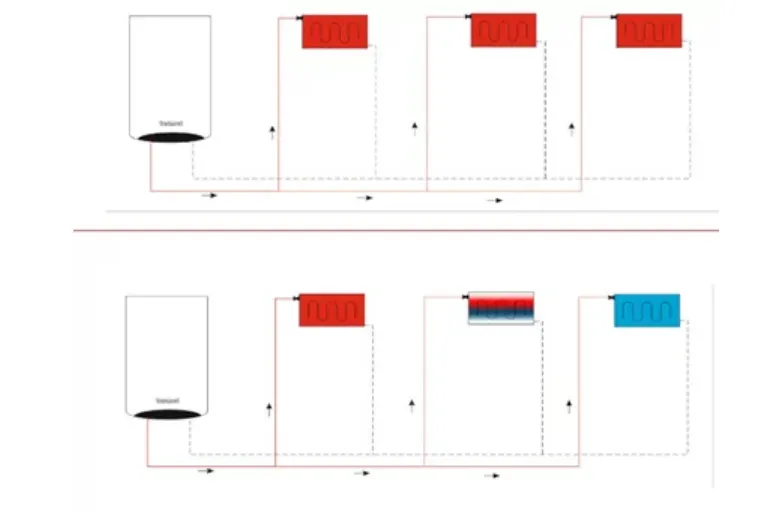
If we do not restrict the flow of heated water from the heat source—such as a boiler—it will release the most heat in the radiators located closest to the source, with less and less heat reaching those further away. As a result, some rooms become overheated, while others remain cold. However, simply reducing the flow in the radiators closer to the heat source and increasing it where the water arrives later will ensure that heat is distributed evenly and that the entire system operates stably and efficiently. This is precisely the role of preset valves.
Why choose valves with a preset?
Thanks to their preset adjustment , FERRO thermostatic valves allow for precise regulation of the heating medium’s flow through the radiator, thereby distributing heat evenly throughout the entire system. This significantly improves users’ thermal comfort while also:
- improves system efficiency,
- reduces energy consumption,
- ensures a stable temperature in every room.
How do you set the preset on FERRO decorative thermostatic valves?
- Remove the thermostatic head from the valve.
- Place a 13 mm wrench on the valve insert.
- Set the desired value (1–6) at the (-) mark on the valve body.
- Reattach the head.
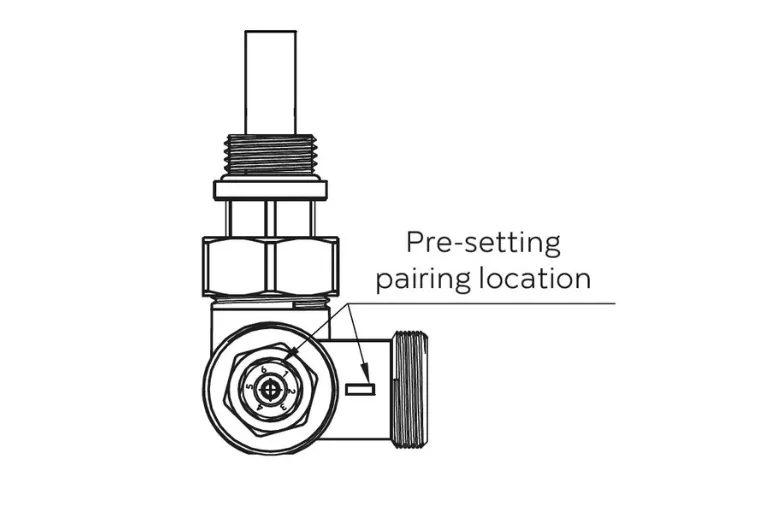
Adjustment is simple and intuitive—the scale from 1 to 6 indicates the flow rate of the heating medium, where 1 is the lowest flow rate and 6 is the highest.
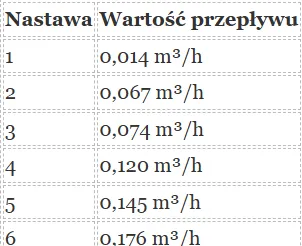
FERRO valves are factory-set to 6, which is the maximum flow rate. However, to achieve hydraulic balance in the system, these settings must be adjusted: radiators located closest to the heat source should have lower settings, while those farther away should have higher settings. This ensures that each radiator receives the appropriate amount of heat, resulting in even heating and efficient operation of the entire system.
FERRO Thermostatic Valves—Two Levels of Adjustment
Importantly, after setting the flow rate using the preset, the user can still conveniently adjust the room temperature using the thermostatic head. The preset determines the maximum amount of heat that can reach the radiator, while the thermostatic head allows you to adjust it on the fly as needed—for example, to turn down the radiator when you’re not using the room or to increase the temperature when you return from a walk feeling cold. Thanks to this dual-control system, the heating system operates efficiently, and household members can optimally adjust the temperature to their needs.
It’s worth noting that FERRO’s decorative thermostatic valves are not only functional but also aesthetically pleasing. The sets are available in four colors (white, chrome, matte black, and anthracite) and can be easily matched to the style of the interior and the radiator.
You can find more expert advice on the FERRO PRO YouTube channel.